

· Domain extensions
What Is a TLD (Domain Extension)?
Not sure what .com, .in or .org mean? This guide explains TLDs, also called domain extensions, with types, costs and tips for choosing.
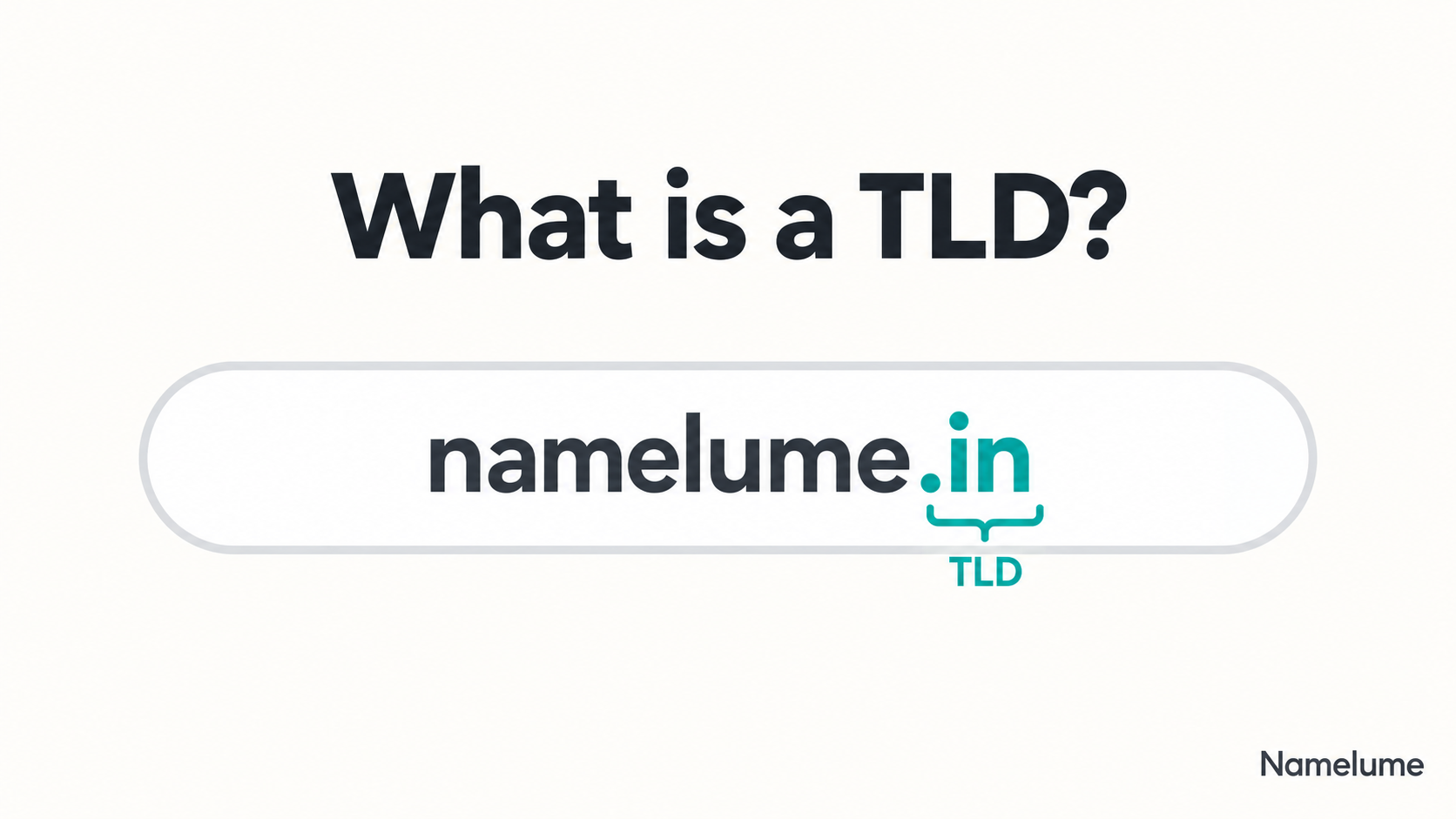
A TLD, short for top-level domain, is the last part of a web address, after the final dot. It is also called a domain extension. In namelume.in, the TLD is .in. This guide explains what a TLD is, the types, what a domain costs with each TLD, how many TLDs exist and how to choose one.
What is a TLD (domain extension)?
A TLD, or top-level domain, is the group of letters after the final dot in a domain name. In example.com the TLD is .com, and in example.in it is .in. A TLD is also called a domain extension. ICANN coordinates the system of top-level domains, and IANA keeps the official list. Each TLD is run by an organisation called a registry, which sets the rules for who can register it.
What are the types of TLDs?
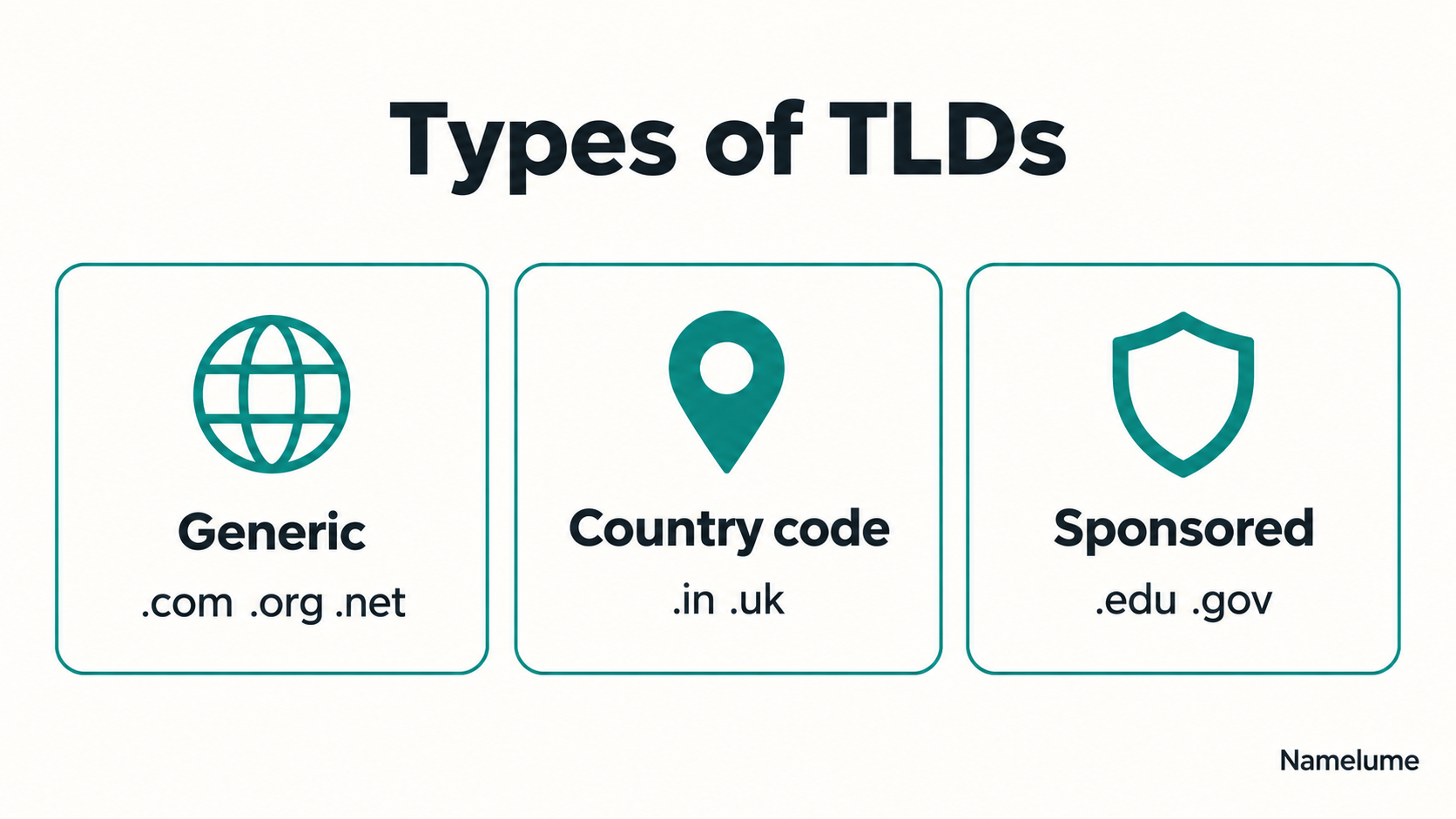
IANA groups top-level domains into types, and three of them matter when you register a domain, as listed below.
- Generic TLDs (gTLDs) are not tied to a country. Examples are .com, .org and .net.
- Country code TLDs (ccTLDs) belong to a country or territory and are usually two letters. Examples are .in for India and .uk for the United Kingdom.
- Sponsored TLDs are for a specific community and have rules about who can register them. Examples are .edu and .gov.
A fourth type, infrastructure, has one TLD, .arpa, which supports the technical systems of the internet.
The type shows who a TLD is meant for. Some TLDs are open to everyone, and some have rules about who can register them, so check the rules before you buy. Read more about the .com TLD on its own page.
How much does a domain name cost with each TLD?
A .in domain costs ₹679 for the first year on Namelume. The price of a domain name depends on its TLD, and the renewal price can differ from the first-year price. To see the steps and the price in full, read how to register a .in domain. Prices are as of October 2026 and can change.
How many TLDs are there?
As of February 2026, IANA’s root zone database lists 1,593 TLDs. The number changes as new TLDs are added and old ones are removed. Not every TLD is open for public registration, because some are limited to a community or an organisation.
What is the difference between a domain name and a TLD?
A domain name is the full address you register, such as namelume.in, and the TLD is only its last part, .in. The part before the TLD, namelume, is the name you choose. You can register the same name under different TLDs, for example namelume.in and namelume.com. Each one is a separate domain and can have a different owner.
Which TLD should you choose?
The right TLD depends on who you want to reach and what your site does, as the choices below show.
- Choose .in or .co.in if your customers are mainly in India.
- Choose .com if your audience is global.
- Choose a TLD that describes your site, such as .store or .tech, if the name you want is taken.
A TLD that matches your audience tells visitors what to expect before they open your site. To compare the three most common choices in detail, compare .in, .co.in and .com.